

How to segment your prospects with email marketing automation | Smart Insights

9 Key Benefits of Email Marketing Automation for eCommerce Businesses
November 1, 20203 Tips for Making Marketing Automation Work for the Entire Customer Lifecycle
November 1, 2020How to segment your prospects with email marketing automation | Smart Insights
When it comes to your email marketing channel, the key to realizing and implementing this sales approach is through prospect segmentation, the more specific, the better.
I see it way too often: companies going for the quick sale. They do it before they even get to know you. It’s like a salesperson at a retail store, immediately after you walk in, saying ‘Hi – I know just what you need, and it’s right over here!’ Big time turn off. Plus, you’ll probably never go back there again.
Such ‘push’ selling is dead and has been replaced by personalized selling approaches. When it comes to your email marketing channel, the key to realizing and implementing this sales approach is through prospect segmentation, the more specific, the better.
In case you’re still a doubter, here are some compelling statistics from email automation vendor Mailchimp:
Always remember your goal: to create more personal and empathetic connections with your prospects, and thereby to better sell to and service them. Best of all, these closer connections will result in higher engagement and conversions today, and higher customer loyalty tomorrow.
It’s about the questions you ask
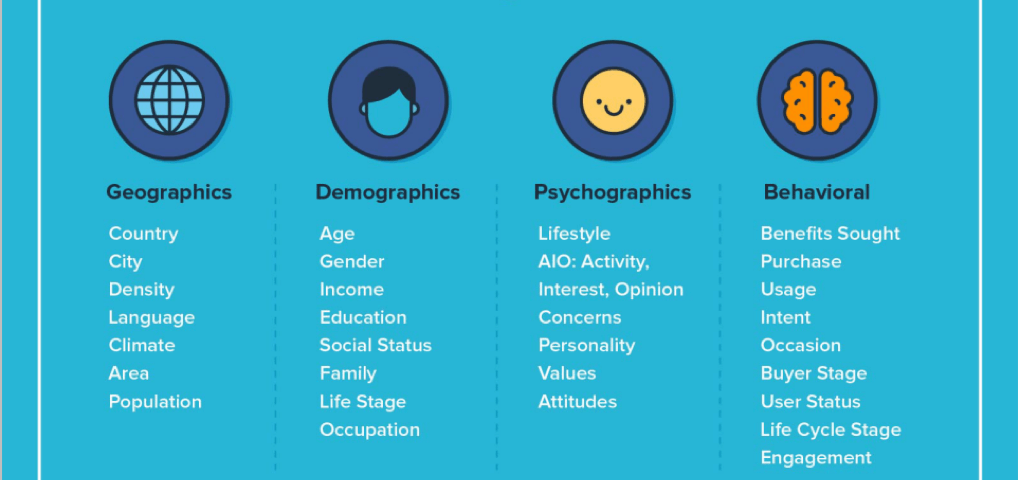
First, for the unaware, a definition of ‘segmentation:’ the process of placing your prospects into different groups based on common characteristics. Some of these traits are inherent (for example, based on demographics or psychographics), and some are behavioral (that is, the things you learn as prospects interact with your brand over time).
Imagine that you own a website named ToddlerStomp.com that sells shoes to toddlers (kids aged 1 to 4 years). You sell great shoes — cool-looking, durable and responsibly sourced. But, for some unknown reason, your customers aren’t beating (or stomping) their way through your virtual front door.
Download our Individual Member Resource – Email and Marketing Automation playbook
If you’re trying to improve communication with your customers, increase subscriber lists or optimize your promotional offers through email, this is the best place to start.
So, how do you get them more engaged? Use the power of segmentation. For example, identify all prospects who are married and have one or more children under four-years-old. Or prospects who have signed up for your newsletter, viewed the first two emails, then done nothing else. (Both could be targets for ToddlerStomp, right?)
So, how to do this segmentation? To get the answers (segments) you first need to ask the questions and track the clicks that help you discern these unique personality traits.
Example: new email subscriber on ToddlerStomp.com
Let’s assume that one of your visitors just signed up for your email newsletter. That’s wonderful, but of no monetary value. What is the first question you should ask this question in the next email you send? Hold on — let’s first back up a minute.
Before you start asking questions, you should take stock of what you already know about each prospect. By linking certain website session data — for example, visit date, state and device used — with their email, you already know something about them, things you can use to tailor your follow-up marketing messages.
If, for example, a given prospect is visiting from Minnesota, and it’s late November, chances are they will need warm shoes for their little one. So you can base the first questions you ask on these underlying assumptions.
But you should also validate these assumptions. In this case, the visitor could be a grandparent of the child, looking to purchase shoes for their grandson for Christmas. That’s quite different than a mother shopper.
So you might start by saying, ‘Thanks for joining the ToddlerStomp insider’s community, where you get a personalized shoe-shopping experience for your little one!’
‘Where does your toddler live?’
[ default state selection to Minnesota, with the option to change ]
‘Boy or a girl?’
[ select girl, boy ]
‘What’s his/her birthday?’
[ month/day/year ]
Provide prospect next-step paths
After this prospect presses the ‘Continue’ button, you can then either:
(Path One) Just save their info and patiently wait to send them another email in a few days. You can tailor this email, for example, to people in cold climates, and who are shopping for girl’s shoes.
(Path Two) Send your prospect to a landing page that’s specific to this same segment (parents in cold climates, shopping for girl’s shoes). You can tailor the copy and call-to-action to prospects in this segment.
If you work for a premium brand (that sells shoes costing two times the standard price), Path One might be best. Why? Because you need to prove the extra value of this fancy footwear (design, quality, brand image, etc.). But if you’re selling regularly-priced shoes, Path 2 should work for you.
Avoid the (often strong) tendency to ask too many questions. Three is the maximum I recommend. Ask more and it starts feeling like a survey or interrogation, feelings you definitely don’t want to invoke early in the sales process. You can always ask more questions tomorrow, in the next email in the sequence.
If in doubt whether to ask a particular question, ask yourself: “If I asked this question of a prospect standing in front of me, would it be awkward or annoying?’ If you answered ‘Yes’, skip it.
It’s the tags that add the value
How, mechanically, do you define these various segments? With tags. Not just for tweets or Instagram posts, tags should be added to each prospect’s record as they interact with your brand.
If, in the above ToddlerStomp example, a prospect selects the Minnesota and Girl options in your first email, add the ‘#MN’ and ‘#girl’ tags to their customer record in your customer relationship management (CRM) application. If then, in the next email, they choose ‘girl’s size 6’, add the ‘#girls-size6’ tag as well.
Just knowing these three things you could send this prospect the following offer (wrapped in compelling marketing copy, of course):
Send offer: ‘warm shoes for girls aged 3-4 with shoe size 6′
Now that’s a pretty specific — and personalized — offer. And much better than sending them some warm-weather shoes suggestions (oops!) or some other generic promotion!
You get the idea. The more you learn about each prospect or customer, the most you use that knowledge to send a) the next logical question in the relationship-building sequence, and/or b) the most personalized offer (or offers) you can. Even if you don’t get the sale today, you’ll show that you value getting to know this person better, which builds trust in your brand.
If you want to broaden your email segmentation thinking, marketing analytics expert Neil Patel offers ten other ‘quick and east’ email marketing segmentation ideas.
If you’re a glutton for more, the savvy marketers at OptinMonster offers 50 more ideas for how to segment your email list.
Create some email sequences and logic
Now that you’re familiar with segments and tags, let’s talk about how to serve up segment-specific content to each of your prospects with conditional logic.
As the above schematic shows, adding conditional logic and branching is simple in theory and just a matter of:
For ToddlerStomp, Sequence (1) should be the ‘Indoctrination’ sequence, which includes both welcome and next-step messaging.
Sequence (2) could be your ‘Girls-start’ sequence. The goal of this sequence: to clarify your prospect’s top considerations for their daughter’s (or granddaughter’s) shoes. Here you might ask questions like:
You get the idea. My point: after your prospect has answered a couple of these questions you’ll have a good sense exactly what types of shoes to recommend (offer) to them. That’s solution selling at it’s finest.
In each of these email sequences, as your readers keep clicking, you learn more and more, and can thus keep refining your messaging and offers accordingly.
Email marketing automation platforms
In digital marketing, as in life, it’s always better to work smarter versus harder. And smarter (and more efficiently) in this context means using an email marketing automation app.
Starter app: Mailchimp
If you’re a small or medium-sized business just getting started with marketing segmentation and automation, MailChimp is likely your best bet. As you can see in the above screenshot, MailChimp’s ‘Marketing Platform’ feature list is quite extensive.
Mailchimp also provides an easy onboarding experience, so it doesn’t require a big-time investment.
Mid-tier option: Infusionsoft by Keap
If you’re seeking a more full-featured marketing automation suite, InfusionSoft should give you all the capabilities you need. As such, it’s best suited to growing enterprises – agencies or mid-tier companies.
Recently acquired by Keap, Infusionsoft now supports advanced sales and marketing automation, and things like a fully-customized campaign. Infusionsoft also integrates with all of the most popular customer-related applications.
For emails, segmentation is the solution
When it comes to sending more personalized messages and offers to your prospects, segmentation is a key piece of the puzzle. And, to keep from going crazing while adding and tracking the tags and associated logic you’ll be adding for each prospect, you’ll likely want the help of an email marketing automation app.
Yes, it’s certainly an investment, but the payoff is big in terms of higher email open and click-through rates. Best of all, your new customers will feel like you already know and value them, which increases their chances of becoming loyal return customers.