

Why agencies are feeling ‘meh’ about automation – Marketing Land

The benefits of using marketing automation
August 24, 2020
Despite budget cuts, CMOs still bullish on marketing automation investments
August 24, 2020Why agencies are feeling ‘meh’ about automation – Marketing Land
When it comes to automation, many agencies are ambivalent about the technology. Marketing Land’s own digital agency survey found 72 percent of respondents indicated “neutral” when asked how they felt about automation. I was not all that surprised by this high number based on my own agency experience. Here’s why.
1. We’re losing sleep trying to keep up with talent demands
On one hand, we’re just trying to keep up with the abundance of client requests and the superspeed of change in the industry. Most of the time there is more demand for work than there are people who actually know how to do it. So I’m also not surprised that the survey found 70 percent of agency respondents are hiring. Nearly 50 percent of that group said they are having a hard time filling positions with only 20 percent indicating they can fill positions relatively easily.
On the other hand, I think we are actually just trying to juggle increased demands from clients. And don’t forget the time it takes to hire, train and retain talent as well. Somewhere in the midst of all of that, we’re supposed to care about “automation.” If anything, agencies are just learning how to work smarter where we can. For the rest of it, we’re juggling deadlines, putting out a Twitter fire or trying to keep up with new technology, testing, updating and… everything else.
2. We’re only scratching the surface with AI and automation
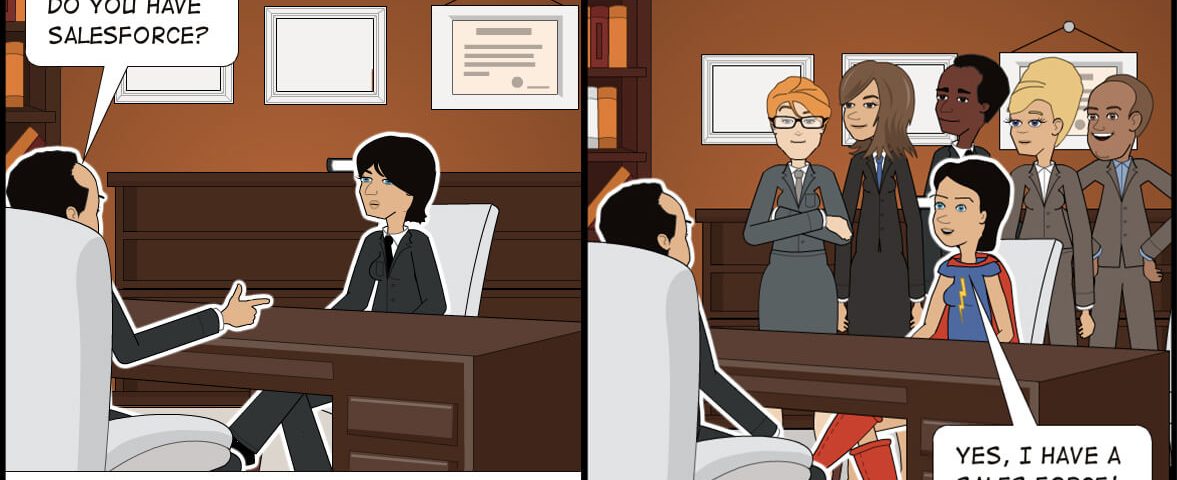
Most businesses are not even scratching the surface of what automation can actually do for them when reviewing a potential martech stack. From what I’ve seen – especially in the OEM and B2B space – more companies are paying for Salesforce who still don’t even know what Salesforce Pardot, Marketo or any of other marketing automation systems are. Nonetheless, they are using them to take over their agencies or marketing departments.
What’s worse is that some of them have the systems and are not using them. For those with marketing automation systems, not all have the internal resources or budgets to implement them properly to make an impact. And, we are not talking about small companies. We are talking about companies doing $100 million in revenue and some of the largest privately held companies in the world.
This cartoon reflects a real-life story.
What AI in marketing really means is logic-based learning systems that optimize for what we tell them to optimize for, based on strategies that we create. All of this still requires advanced, high-level strategic thinking, technical skills and analytics. This is why I’m not surprised that 41 percent of agencies in the survey said managing data and analytics is a key issue; and that 40 percent said keeping up with automation is a challenge.
3. We are not robots, nor should we trust the robots
If by some miracle all of the companies were using automation to its 100 percent potential on every possible Martech stack they had, they’d still need humans. And, if I’ve learned anything from Google over the last ten years, it’s that you can’t just “set it and forget it.” Whether it’s auto-opt-in or out, or plain old algorithm changes, just leaving these systems to their set protocols is a sure recipe for disaster. For some additional context, I had a client once ask me to do this (yes I cringed and kicked a bit but ultimately it was a great anti-case study). Here’s a little snapshot of what we saw happen:
Other fails: Anyone remember when automatic emails from Expedia were going out during hurricanes? Fail. I’m not saying automation doesn’t have its place, and hey, marketers need the help, but automation should be used intelligently for companies that are equipped with the resources to implement it.
4. We know the real story about the ‘full stack marketer’ unicorn
We’ve all seen the ads hiring for an SEO, SEM, web developer, PR, social media, technology expert, WordPress guru, UX/UI, Martech ninja-skilled marketer with 7-plus years of experience in everything including dropping off the dry cleaning … like what?
Don’t worry. The unicorns aren’t taking our jobs any faster than the robots. What agencies know is that unicorns are full teams of people. So, even though 49 percent of respondents stated that clients were taking agency services in-house, I wouldn’t worry that means our jobs are going anywhere.
So why is it, right now, the majority of us are hiring and we can’t fill positions fast enough? Because there is a big demand for our expertise and education. Even those of us who dedicate 100 percent of our time to this industry need to work together to keep up with it all. If automation is going to increase efficiency where possible, great. But the reality is, it’s really not changing much about our regular day. It’s adapting just as fast as the first time someone said SEO was dead. SEO never died, it just evolved. Automation is part of our evolution.
Opinions expressed in this article are those of the guest author and not necessarily Marketing Land. Staff authors are listed here.
Amanda Farley is a partner at (SS Digital Media) in Metro Detroit, where she leads operations and strategic planning. With nearly 10 years in the search industry, she uses her experiences to lead digital strategy for enterprise-level brands and companies. Her integrated campaign strategies have earned her and her agency national and local recognition and awards. She’s passionate about growing her teams, clients, and local communities. Outside of the office, Amanda enjoys regularly speaking at local and national conferences, including SMX, FoundConf, HeroConf as well as PRSA and Detroit Women in Digital events.